
If you provide your Hamster with a wheel, it will run up to 8 miles per night!
Hamsters are small animals which makes them easy to care for and inexpensive to keep. Their small size means they can be housed in relatively small cages, even an old birdcage or an aquarium can be used.
Hamsters are gentle, attractive and amusing to watch. They are virtually odorless and are habitually clean. All this aspects make them great pets for anybody but especially for apartments or houses where space is at a premium. They are nocturnal, so 90% of their waking hours are at night when the cage is dark. They can also be a bit nervous when moved to a new home, so they may take a bit of time, along with patience and love, to become settled.
“Pepper” pictured here, is a very pretty Golden Hamster. Dr. Jungle shares what Janet has to say about her… “She is very sweet, smart, and friendly. One time she opened her cage door all by herself. She loves to go for long runs outside or in her ball. On her back she has a heart shaped pattern!” …Janet
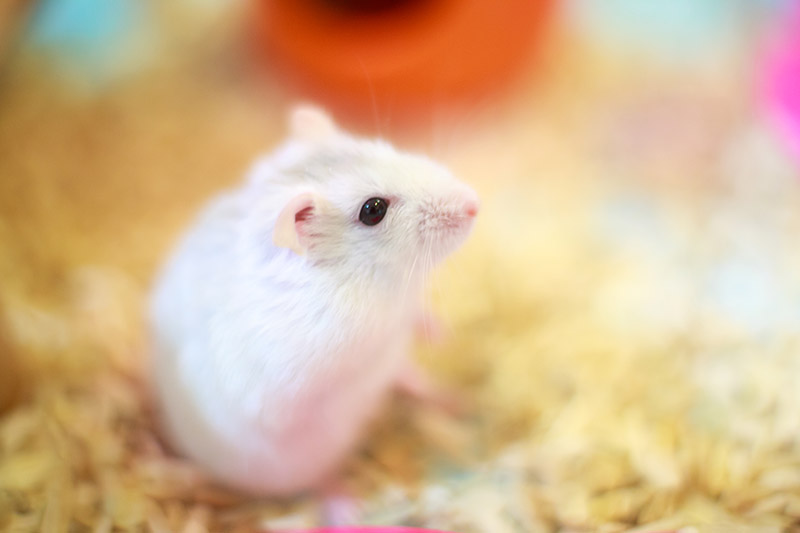
The Golden Hamster was the original breed of middle sized hamster which has been bred successfully for many years and thrives as a domesticated pet. The Russian Dwarf Hamster is the most readily available of the dwarf varieties.
Nowadays, hamsters come in many many different colors with different types of hair. “Pepper” pictured above is a Golden Hamster. The three babies (pictured below with the breeding information) are Longhaired Golden Hamsters, also known as Angora Golden Hamsters because of their long coat.
Click here to see Russian Dwarf Hamsters!
- For information about Small Animals and their care visit: Guide to a Happy, Healthy Small Animal
Scientific Classification
| Kingdom: | Animalia |
| Phylum: | Chordata |
| Class: | Mammalia |
| Order: | Rodentia |
| Family: | Cricetidae |
| Genus: | Mesocricetus |
| Species: | auratus |
Scientific names
Giant Hamsters:
- Cricetus cricetus – European Hamster – European Field Hamster
- Black-bellied Hamster, Common Hamster
Medium Hamsters
- Mesocricetus auratus –Syrian Hamster – Golden Hamster – Teddybear Hamster
Fancy Hamster, Standard Hamster, Syrian Golden, Longhaired (Angora)
Golden, Checkered Golden, Beige Golden, and Teddy (Satin) - Mesocricetus newtoni –Rumanian Hamster
Romanian Hamster - Mesocricetus brandti –Turkish Hamster
Brandts’ Hamster - Mesocricetus raddei –Ciscaucasian Hamster
Georgian Hamster
Dwarf Hamsters
- Phodopus campbelli – Campbell’s Russian Dwarf Hamster
Djungarian Hamster - Phodopus sungorus –Winter White Russian Dwarf Hamster
Syberian Hamster, Sapphire Hamster (color variety), Djungarian Hamster - Phodopus roborovskii – Roborovski’s Hamster
Desert Hamster
Rat-like Hamsters:
- Cricetulus griseus – Chinese Hamster
- Cricetulus barabensis –Chinese Striped Hamster
Striped Dwarf Hamster
(includes C. obscurus andC. pseudogriseus) - Cricetulus longicaudatus –Lesser Longtailed Hamster
- Desert Hamster
- Cricetulus alticola –Tibetan Ratlike Hamster
- Cricetulus migratorius –Grey Rat-like Hamster – Migratory Grey Hamster
Armenian Hamster, Grey Hamster, Grey Dwarf Hamster - Cricetulus kamensis –Kam Ratlike Hamster
- Cricetulus sokolovi –Sokolov’s Ratlike Hamster
- Allocricetulus curtatus –Mongolian Hamster
- Allocricetulus eversmanni –Kazakh Hamster – Eversmann’s Hamster
- Cansumys canus –Gansu Hamster
- Tscherskia triton –Greater Longtailed Hamster
- Korean Hamster
Mouse-like Hamsters
- Calomyscus bailwardi – Zagros Mountains Mouse-like Hamster
- Calomyscus baluchi – Baluchi Mouse-like Hamster
- Calomyscus elburzensis – Goodman’s Mouse-like Hamster
- Calomyscus elburzensis zykovi – Zykov’s Mouse-like Hamster
- Calomyscus grandis – Noble Mouse-like Hamster
- Calomyscus hotsoni – Hotson’s Mouse-like Hamster
- Calomyscus mystax – Great Balkhan Mouse-like Hamster
- Calomyscus tsolovi – Tsolov’s Mouse-like Hamster
- Calomyscus urartensis – Urar Mouse-like Hamster
Background
Hamsters have been a very popular children’s pet for some time now. Although they were not kept as pets until 1930, hamsters are naturally tame and enjoy being handled.
Their name comes from the German word ‘hamstern’ which means to ‘hoard’. They have pockets in their cheeks which can hold an incredible amount of stuff! Usually they will maintain a ‘stash’ of food in the bedding of their cage. This stash should be left alone when cleaning the cage or the hamster can become insecure.
Description
Hamsters have a life span of about 1000 days (a little less than 3 years). The sizes of hamsters will vary with the type of breed. The giant hamster gets to be 8-12 inches long, the middle sized hamster, which is the most common hamster found in pet stores, is 5-6 inches (Golden Hamsters are in this group, including the Syrian Golden Hamster), and the dwarf hamster is only 2-4 inches long!
Environment
Hamsters can be housed in a cage, hutch, aquarium or terrarium. The space should be at least 15 inches long, 12 inches wide, and 12 inches deep so they can get plenty of exercise running around the cage. They also need enough room to set up a toilet area in the cage, which they will naturally do to keep the rest of the cage clean, a place for a nest, a place to eat, and places to play. Keep in mind that they will readily chew through wood, light plastic, and soft metal. Metal cages are generally preferable to keep them from chewing their way out of the cage. Hamsters are known to be good escape artists!
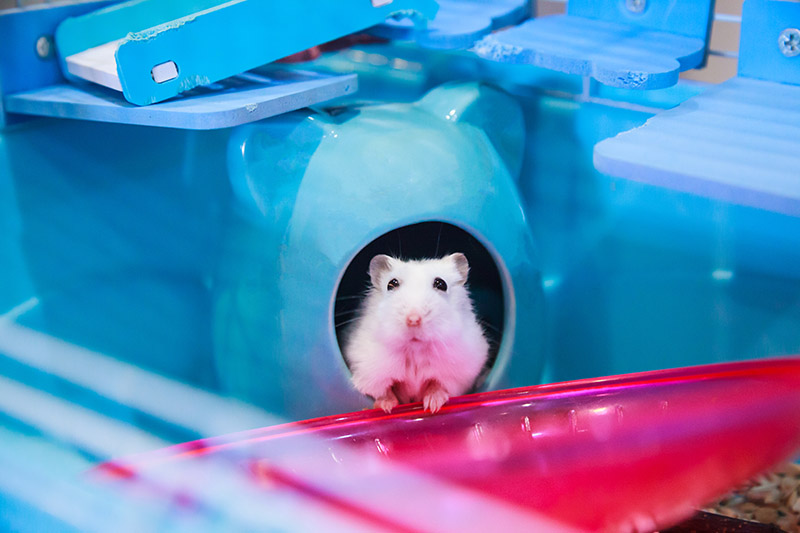
An advantage of a cage is that you can get one with multiple levels which gives them lots of places to climb. A pan bottom on the cage is nice too as this helps keep them from kicking their bedding out. Make sure it has wire spacing no wider than 1/2″. An aquarium will keep the bedding contained so is less messy, but make sure you have a tight fitting but well ventilated top so they don’t escape. There are also a variety of tubes that you can get that fit with various cages, or can be adapted to an aquarium. These make it possible to expand their environment, which they will love as they are very curious and busy.
Provide a good soft bedding that is clean, non-toxic, absorbent, relatively dust free and easily acquired. Shredded paper or tissue, processed corn cob, wood shavings (aspen is best), or a prepared litter are preferred bedding. Avoid cedar or chlorophyll impregnated shavings as they have been associated with respiratory and liver disease. They love to burrow so make sure to give them a good layer, at least 2″ thick. Don’t use blankets or towels as these may be eaten and will become wet and dirty very quickly. Make sure you have a food dish (preferably fastened to the cage) and a water bottle. Also provide your hamster an exercise wheel. Many cages today come with additional accessories such as an exercise wheel, tunnels, and nest boxes.

Care and feeding
Hamsters, both dwarfs and regulars eat the same kinds of foods. The best staple food is a hamster pellet which you can get at just about any pet store. The prepared food will contain all of the vitamins and minerals necessary for your hamster’s nutrition. Go easy on the fruits and vegetables but offer them once or twice a week. Never let perishable food items stay in the cage for more than a few hours.
Chew sticks or hard pellets make great treats and are good for hamsters that want to chew a lot. They will need a fresh supply of water every day. A constant supply of milk can also be beneficial, especially for bred females, nursing females, and babies. If you do provide milk, make sure and remove it if it goes sour.
Activities – Exercise and Play
Hamsters are very active little creatures that need lots of excercise and love to play. They will be most active during the night as they are nocturnal. A wheel is a great accessory for the cage, and a single hamster can run up to 8 miles in one night on his wheel. To offer a little more adventure, think about getting a hamster ball. This offers your little pet an opportunity to run around a room without getting loose or getting hurt.
They are so curious, that they can get lots of enjoyment out of houses with several openings, ladders leading to different levels, as well as tube and tunnel configurations. Many toys of this sort are readily available at pet stores
Social Behaviors
The general rule for hamsters is to keep only one animal per cage. Only young hamsters can be housed together if given lots of space and plenty of hiding places. Dwarf hamsters are somewhat an exception to this rule as they will live together as families as long as they are raised together. Putting dwarf hamsters together that don’t know each other often results in fighting.
Males are generally easier to keep together than females but they may still fight over food and territory. Even when breeding a male and a female are only placed together for short periods of time and then removed (see Breeding, below).
Handling and Training
Hamsters are naturally inquisitive little creatures and taming them is simply a matter of gaining their confidence. Always be patient, gentle, and move slowly. Making friends with your pet and getting him accustomed to you can often be accomplished by offering tidbits such as a peanut, raison or sunflower seed, which he will want to examine.
Never pick your pet up the the scruff of the neck. Hamsters are nervous so always let him see the back of your hand first and extend it slowly. If he does not run away from you, hold your hand above him and then gently close it around his entire body, or scoop him up with your palms on either side of his body. If he is scared, or lays on his back in a defensive posture you will most likely get bitten if you try to pick him up. In this case, use a small container for him to scurry inside of until he gets comfortable with you.

Breeding/Reproduction
Middle-sized or Golden Hamster
If you want to breed hamsters the best thing to do is to find a pair about six weeks old. Although they can breed when younger than this, at about 35 days, it is better to breed them when they are older, about ten weeks old or so. If you get the pair when they are six weeks old, this will give them plenty of time to become comfortable with the environment you provide before breeding them. In general, to be able to care for her first litter, the female should be full-sized and weigh at least 100 grams (3.5 ounces). Litters from females who are too young are often born dead or are too small so the mother will kill them. On the other hand, don’t wait too long to breed them either. The female will usually have a maximum of six litters.
To breed the pair, take the female from her cage using a scoop or cup (don’t use your hand), and place her in the males’ cage for a while. If she is receptive, she will arch her back, raise her tail, and stand still for some time. The actual breeding will last about 20 minutes or so after which you should return the female to her cage.
Clean her cage in the mean time since you shouldn’t disturb her for some time after breeding. Never put the male in the females’ cage since she will probably beat him up. The process of putting the female in the males’ cage may have to be done for 5 nights before anything happens. Always return the female to her cage the same night. They may scuffle at first but do not be alarmed, they will settle down quickly.
After breeding the female should be left undisturbed, except for water and food of course, until the 12th day, at which time you should do a major cleaning and replace all the bedding. This will give her about 4 days to make the nest and get comfortable with her surroundings. Put in lots of bedding and plenty of food so you won’t have to disturb her too frequently. Don’t handle her at all.
During pregnancy and while the mother is nursing provide high protein and fatty foods like nuts, carrots, sunflower seeds, milk, milk soaked bread, lettuce, wheat germ, and hard boiled eggs. Make sure the babies can reach the water bottle. The mother will average about 8 puppies, but anywhere from 2 to 16 can be born.
Don’t touch the pups or clean the cage until they open their eyes at about 16 days. Also don’t separate the family and try not to touch the babies. They can be weaned at 18 to 21 days at which time they should weigh about 1 ounce. Since they are nearly mature when they are weaned, males and females should be separated at this time (if possible).
Dwarf Hamsters
Breeding dwarf hamsters is just a little different than the Golden hamster since pairs or even colonies of adults can be kept together. The advantage of the colony approach is that any aggression of the female will be spread out over several males which makes it easier to correct the situation before the male is killed.
The gestation period for dwarfs is 18 to 30 days but is usually 21 days. The males can be left in the cage and will actually help tend the young. Sometimes the mother will chase them away but usually no harm will come to them. The youngsters will open their eyes at about 15 days and can be removed from the nest at 30 days.
Different species of dwarfs mature at different times and have different life spans. More on this later when we establish a “Dwarf hamster” page for this website.
Common health problems
In general hamsters are healthy, hardy animals and only need to see a veterinarian if they get ill or hurt.
There are no known ailments that effect only hamsters. A number of ailments that can affect hamsters from time to time though are listed below:
- Skin Damage: Small cuts and other wounds to the skin can usually be taken care of by the hamster himself. They will generally lick the area to clean it and it will heal nicely. Only large gaping wounds need the attention of a veterinarian.
- Teeth: Hamsters teeth will continually grow and therefore you need to keep a chew stick or hard dog biscuit in the cage for them to gnaw on. Actually they will gnaw on just about everything including the cage, so the chew stick is just directing their natural tendency to chew. Their teeth can become broken or chipped in which case you can trim them with a nail clippers or a small file.
- Hair loss: Hair loss is normal for hamsters over 10 or 12 months of age. They will gradually lose hair starting at the rump and moving forward as time goes by. If your hamster is losing hair before it is 5 months old you should consult a veterinarian.
- Salmonellosis: A rare pet disease which comes from wild rodents, dirty water, or spoiled foods. Salmonellosis is an intestinal tract infection that will require veterinarian help. The signs of salmonella is a ruffled coat, loss of appetite, and weight loss.
- Pneumonia: A serious lung infection whose signs are ruffled coat, lack of appetite, runny nose, coughing, and sneezing. The animal needs to be taken to the vet if these symptoms occur.
- Colds: Symptoms are lack of activity, ears laid back, runny nose, sniffling, and sneezing. Try not to handle your hamster if you have a cold but if it does get a cold make sure to sterilize all water and food bowls and keep the bedding real clean. Make sure there are no drafts on the hamster. Offer plenty of good foods and supplement them with cod-liver oil to help your hamster get over it.
- Wet tail: A bacterial infection that causes diarrhea, ears laid back, loss of appetite, and a fluid like discharge from the vent. The animals’ hind quarters will appear dirty and wet. There is a broad spectrum antibiotic called Drytail which can help this condition if caught soon enough. Most pet stores should have it, otherwise take the animal to a veterinarian.
- Diarrhea: Different than wettail, diarrhea is not an infection and is usually caused by overfeeding vegetables and fruits or maybe contaminated foods. Quit feeding fruits and vegetables for a couple of days to see if it clears up. If it doesn’t, take the animal to a veterinarian. Another cure that works on Chinchillas is to feed them shredded wheat biscuits. Again, the condition should clear up in a few days.
- Constipation: A condition that can also indicate wet tail, constipation can also result from feeding pellets without adequate water. Apparently the pellets will swell up in the intestine causing blockage if not enough water is available. The cure is to provide plenty of water and to feed carrots, carrot tops, and other fruits and vegetables. A cure used with Chinchilla’s is to feed the animal raisins.
- Mange: Symptoms include the hamster shaking its head a lot, scratching at its’ ears, severe hair loss, and general poor appearance. Soon after this gray scabs will appear on the nose, ears, and genitals. Take the animal to a veterinarian who can prescribe a medicated bath. Make sure and sterilize everything (cage, food dish, water bottle, etc.) while treating this condition.
- Fleas, lice, other skin disorders: Since hamsters spend a lot of time grooming themselves, skin parasites are a rare problem. Generally dirty conditions may provide breeding places for these types of pests so make sure and provide a dry, clean environment. Fleas and lice can also be passed on to the hamster from other pets like dogs and cats. A good flea powder should eliminate this problem. Change the bedding just before using a flea powder so any eggs that are about to hatch will be discarded.
- Overgrown nails: If your hamsters’ nails become too long, simply trim them with fingernail clippers and emory board. Make sure not to trim them too close since they have a blood vessel that extends a short ways into the nail (similar to a cat).
- Watery eyes: Any excess water around the eyes may indicate problems in the rear of the cheek pouch. You may need to wash out the pouches with an eye dropper or syringe (without the needle). This will remove any soft food that may be caught in the back of the pouch. Also try to keep the hamster from storing food in the pouches for awhile by feeding only soft foods and not too much of them.
- Lumps: Any lumps or bumps should be checked by a veterinarian.
- Paralysis: This seems to be common among hamsters and is usually caused by a lack of exercise, a spinal injury, or lack of vitamin D. Provide plenty of exercise toys and supplement the diet with wheat germ and wheat germ oil if your hamster seems to be losing the use of its’ limbs. If it becomes advanced, take the hamster to a veterinarian.

Availability/Purchasing your Hamster
Both middle-sized and dwarf hamsters are readily available.
Featured Image Credit: Ricky Kharawala, Unsplash